
Sodium-Ion Batteries for Car Audio: What Actually Matters
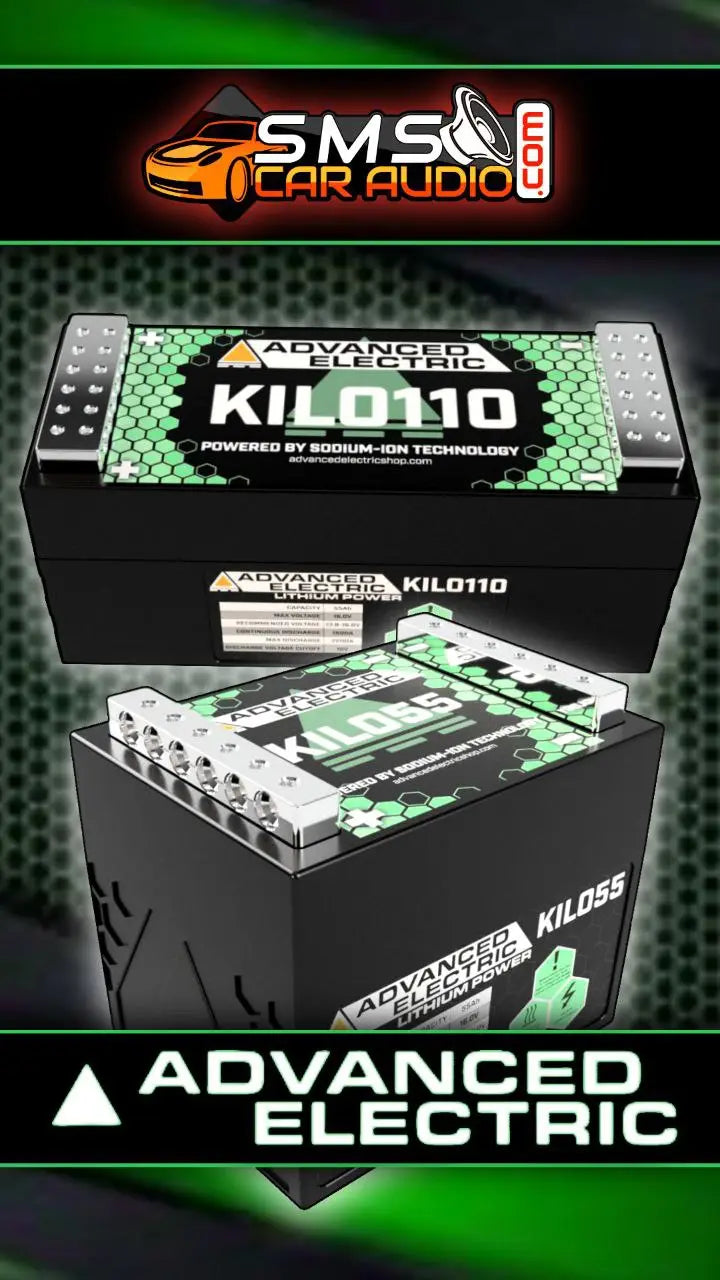
Advanced Electric was part of an important stage in SMS Car Audio’s electrical-system history. We do not currently stock Advanced Electric, but the sodium-ion systems we worked with during that period were solid tools for the builds we were doing and helped move us further into the high-current storage technology we work with today.
The brand and products can change. The electrical problem does not: if the audio system is asking for more current than the vehicle can reliably supply, adding amplifier power by itself will not fix it.
Advanced Electric was part of the progression.
SMS did not start learning high-current electrical when today’s sodium-ion products showed up. We worked through conventional batteries, charging upgrades, capacitor and hybrid-storage solutions, JY Power, Advanced Electric and other electrical platforms as system demand kept increasing.
Advanced Electric was one of the points where sodium-ion became part of that progression for us. The work reinforced the same lesson we still use now: storage chemistry is only useful when the alternator, wiring, grounds, fusing, voltage range and amplifier demand all agree with it.
Start with current demand.
Amplifier power has to come from somewhere. Before adding battery capacity, we look at the amplifier load, expected use, charging system, wire runs, grounds and voltage behavior of the vehicle. A daily sound-quality system and a high-output build can need very different electrical support.
Battery chemistry is one part of the system.
Sodium-ion gives us another way to support demanding audio systems, but the chemistry does not replace system design. Every battery or storage platform has an operating voltage, charging behavior, current capability, physical package and application where it makes sense.
That is why we do not choose a battery from an advertised wattage number alone. We match the storage to the vehicle and the electrical system that has to charge and use it.
The alternator still matters.
A battery stores energy. The charging system has to put that energy back. If the audio system is regularly demanding more current than the alternator can replace, adding storage can delay the voltage problem without fixing the underlying deficit.
Wire, grounds and fusing are not accessories.
Good electrical support depends on the whole path: charging wire, grounds, fuse protection, distribution and connection quality. Voltage lost through a poor connection is voltage the amplifier never gets to use.
From earlier builds to the sodium-ion systems we use now.
Our work with Advanced Electric, JY Power and other earlier platforms was part of the foundation—not something we need to erase because the brands we stock have changed. Those systems taught us how storage, charging and real amplifier demand behave together in high-current builds.
Today we apply that experience to the sodium-ion and electrical products we use now. The chemistry and hardware keep evolving; the process stays the same: measure the demand, size the charging and storage, build the current path correctly, protect it properly and verify the voltage behavior when the system is actually being used.
Planning a high-power system or fighting voltage drop? Start with the demand instead of throwing another battery at it.
Battery & Electrical Upgrades | High-Output Alternator Planning | Current Sodium-Ion Battery Planning | Contact SMS Car Audio