GA-Barnie Measurement & Mosconi DSP Tuning: What the Measurements Tell Us
A DSP gives us control. Measurement tells us what the vehicle is actually doing with it.
That distinction matters. We are not tuning a system to make a graph look impressive. We are using measurement to find problems in the signal, speaker interaction and listening position, then listening to verify that the changes actually improved the music.
Why a vehicle needs more than a basic EQ pass
The left and right speakers are different distances from the driver. Glass, doors, seats, trim and speaker placement all change what reaches each ear. Factory processing can add another layer before the aftermarket system even starts.
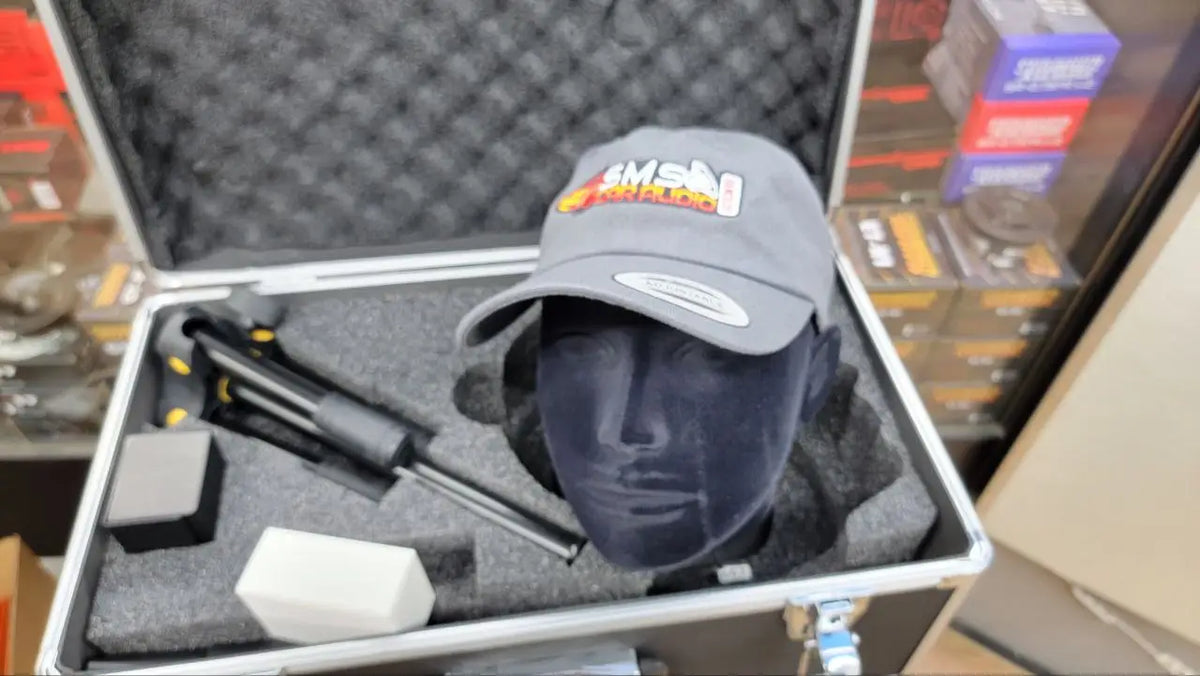
GA-Barnie binaural measurement gives us left- and right-ear information at the listening position. On Mosconi DSP systems and other advanced builds, that helps us see whether the stage, tonal balance and crossover regions are behaving the way we expect.
What we are looking for
- Left-to-right tonal imbalance.
- Crossover overlap or cancellation between tweeter, midrange and midbass.
- Subwoofer phase and timing problems around the front-stage handoff.
- Peaks and dips created by the vehicle or installation.
- Whether timing, level, polarity, phase or EQ changes actually improved the result.
DSP cannot repair a bad foundation
If a speaker is mounted poorly, the input signal is clipped, polarity is wrong or the subwoofer enclosure is wrong, EQ is not the real fix. We verify the signal path, speaker mounting, amplifier setup, crossover safety, wiring and electrical behavior before treating tuning like the answer to everything.
How an SMS tune comes together
We start by verifying the source and routing. Then we establish safe crossovers and gain structure, check polarity and phase, set timing and levels, measure the listening position and make controlled adjustments. After that, we listen.
The final check is not just whether the response changed. It is whether vocals lock into place, the front stage stays stable, harsh areas settle down, midbass has weight and the subwoofer blends into the system instead of sounding like a separate box behind you.
Where Mosconi fits
Mosconi gives us the processing tools to control complex active and factory-integrated systems. GA-Barnie is one measurement tool in that process. Neither one replaces system design; they let us finish a properly built system with more information and more control.
Planning a DSP system?
Send the vehicle, factory audio package, current equipment, speaker layout, amplifier plan, subwoofer setup and what sounds wrong now. We can determine whether the problem starts with OEM integration, hardware, installation or tuning.
DSP Tuning & OEM Integration | Mosconi DSP Planning | DSP Build Proof | Plan the System