

Description
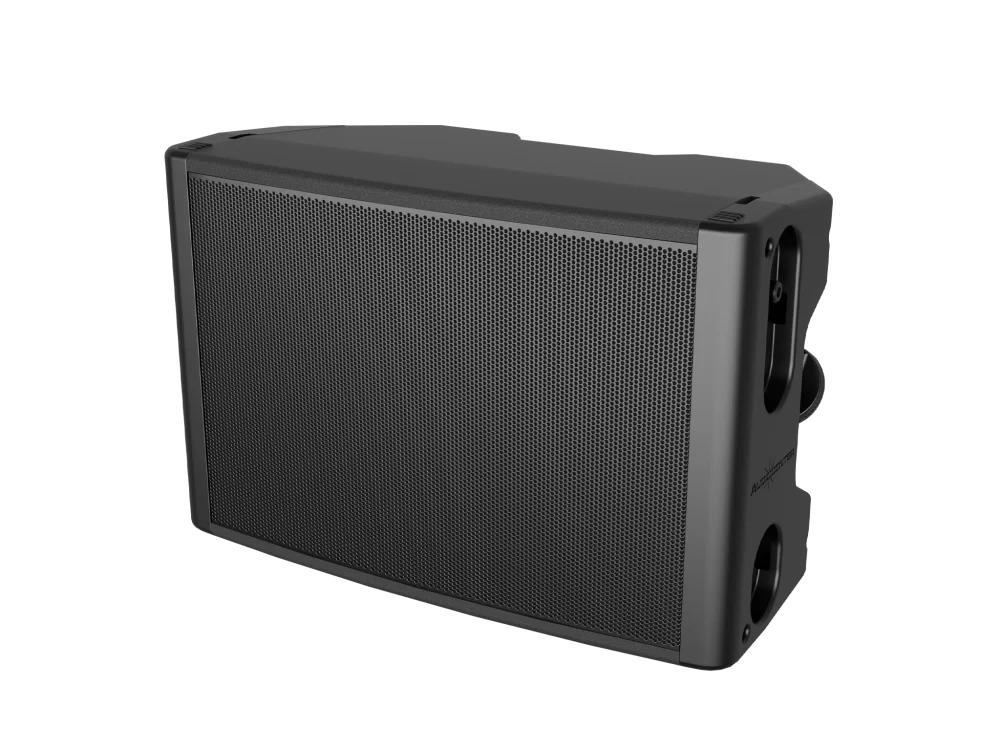
AudioCenter T8 Passive 8-Inch Modular Line-Array Loudspeaker
The T8 solves a different problem than a normal 8- or 10-inch PA box. Use it when the room or installation needs wide 110° horizontal coverage, controlled array geometry, and a cabinet small enough to deploy singly or build into a compact multi-box array. One T8 can work as a point-source-style fill or installed cabinet; multiple T8s can be mechanically angled to shape vertical coverage over a larger audience area.
That flexibility is the real reason to buy it. If one conventional full-range cabinet already gives you the output and coverage you need, the T8 adds rigging and amplifier-planning complexity you do not need. If the job needs several small cabinets working together, adjustable splay angles, near-field coverage, or distributed mounting without large boxes hanging in the room, the modular T8 architecture makes more sense.
Single Cabinet or Small Array?
Use one T8 for a compact fill, delay, wall-mounted zone, or smaller audience area where 110° horizontal coverage is useful. AudioCenter includes a wall-mount bracket for single-cabinet installation.
Use multiple T8s when the audience depth or vertical coverage needs to be shaped rather than simply made louder. The cabinets support 0°, 2°, 4°, 6°, 8°, 10°, and 12° inter-cabinet angles. That lets the array curvature be matched to the room instead of stacking boxes at one fixed angle.
Do not confuse adding cabinets with automatically creating deep bass. AudioCenter publishes the T8 at 65 Hz–20 kHz (-10 dB). For music systems that need real low-frequency extension, we would still pair the T8 section with an appropriate subwoofer system.
Amplifier and System Planning
The T8 is passive: it does not contain an amplifier or DSP. AudioCenter rates each cabinet at 260 watts and 8 ohms. The amplifier channel, number of cabinets per channel, total impedance, limiting, crossover strategy, and array size all need to be planned together. A multi-cabinet T8 system should not be treated like several independent speakers randomly paralleled onto one amplifier channel.
The four 1-inch high-frequency drivers are arranged in AudioCenter’s T-EYE™ layout around the center of the cabinet, with one customized 8-inch low-frequency driver. The point of that architecture is broad near-field coverage and smoother high-frequency behavior from a compact enclosure—not maximum low-frequency output from one box.
Weather and Installation Limits
AudioCenter rates the T8 IP54. That gives it protection for appropriate weather-exposed installations, but IP54 is not the same as a fully waterproof marine enclosure. Connector protection, mounting orientation, cable routing, drainage, and the rest of the installation still matter outdoors.
The included wall bracket covers one common mounting method. AudioCenter lists pole-mount hardware, additional wall hardware, and a hanging frame as optional accessories. Use the correct load-rated hardware for any flown or arrayed installation.
Manufacturer Specifications
| Type | Passive modular point-source / line-array loudspeaker |
|---|---|
| LF driver | 1 × customized 8-inch driver |
| HF drivers | 4 × customized 1-inch dome drivers |
| Power handling | 260 watts |
| Nominal impedance | 8 ohms |
| Frequency response | 65 Hz–20 kHz (-10 dB) |
| Horizontal coverage | 110° |
| Vertical coverage | 60° |
| Maximum calculated SPL | 122 dB continuous / 128 dB peak at 1 meter |
| Crossover | Passive |
| Input | 4-pin Speakon |
| Inter-cabinet angles | 0°, 2°, 4°, 6°, 8°, 10°, 12° |
| Weather rating | IP54 |
| Cabinet | Wood + molded plastic |
| Finish | Polyurea coating |
| Included | Wall-mount bracket |
| Optional hardware | Pole-mount bracket, wall-mount bracket, hanging frame |
| Dimensions | 418 × 277 × 261 mm / 16.46 × 10.91 × 10.28 in |
| Net weight | 8 kg / 17.6 lb |
Where this fits in the build
PA loudspeakers should be chosen around coverage, output, placement and the room or audience they need to cover. A column, point-source box or line-array module solves a different deployment problem, so the system layout comes first.