
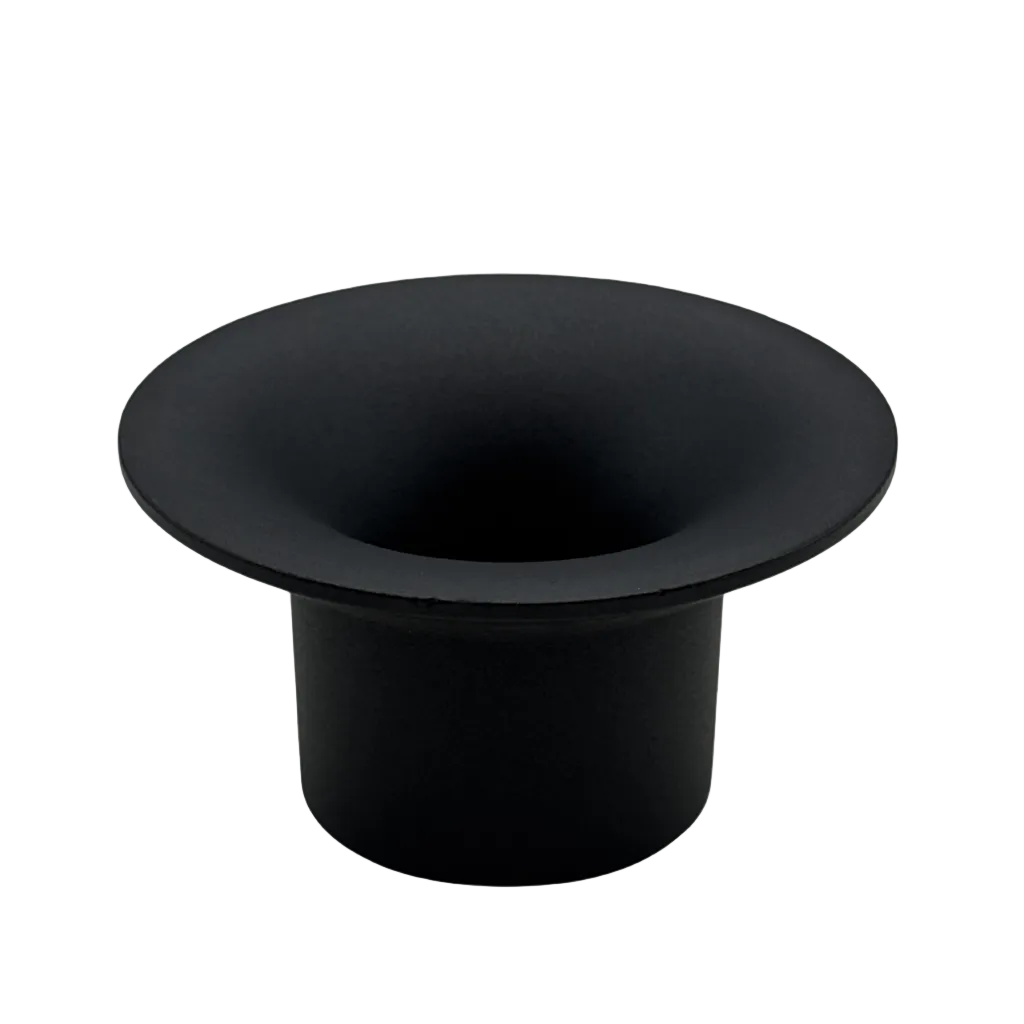
Description
Beyma TD-8CX 1-Inch Coaxial Horn
If the high-frequency section needs to work on the same acoustic axis as the main speaker instead of taking up a separate horn location in the panel, the TD-8CX is the Beyma horn component intended for that coaxial-style system layout.
That is a different packaging problem from the TD-8060, TD-1LR or TD-PH35. Those products are selected as separate horn locations in a fabricated panel. A coaxial arrangement is about putting the high-frequency acoustic path through the same basic speaker axis so the system can combine two frequency ranges without needing two completely separate front-facing openings.
The TD-8CX is sold individually with a 1-inch throat. Confirm the exact mating speaker/driver combination, dimensions, coverage and mounting geometry before fabrication.
Why a coaxial horn can solve a packaging problem
In a custom system, separate mids and horns give us a lot of freedom, but they also consume panel space. A large door, motorcycle lid or powersports panel may already be crowded with midrange drivers. Adding another complete horn opening can force compromises in grille layout, bracing, enclosure space or the location of the other speakers.
A coaxial-style architecture attacks that problem differently. Instead of finding a separate front-facing location for the high-frequency horn, the high-frequency acoustic path is integrated around the same primary speaker axis. That can keep the visible speaker layout cleaner and can bring the acoustic centers of the high- and lower-frequency sections physically closer together.
Closer acoustic centers do not automatically make the crossover perfect, but they can reduce one of the geometry problems we fight in widely separated driver layouts. The system still needs crossover, level, polarity and timing work; it simply starts from a different physical arrangement.
TD-8CX vs. TD-8060
TD-8060: choose it when you want a separate 1-inch constant-directivity horn location and need a fully documented 80° × 60° pattern, 1,500 Hz cutoff and compact 140 × 140 × 67.4 mm package.
TD-8CX: choose it when the build specifically calls for the TD-8CX coaxial-horn arrangement and the exact mating speaker/driver combination has been confirmed.
The TD-8060 is easier to design as a standalone horn because its dispersion and dimensions are defined for that application. The TD-8CX should not be treated as a TD-8060 hidden inside a speaker. Confirm the exact mating geometry and intended acoustic application before using it.
TD-8CX vs. a conventional coaxial speaker
A complete coaxial speaker arrives with the low/mid-frequency driver and high-frequency section engineered as one finished loudspeaker. Models such as Beyma's PRO-series coaxials are bought because the customer wants that complete package.
The TD-8CX is a horn component, not a complete coaxial speaker. It only makes sense when the system designer already knows which compatible loudspeaker and high-frequency driver architecture it belongs with. If the goal is simply “I need an 8-inch speaker with highs,” buying a complete PRO8CXND or PRO8FX370ND is the more straightforward path.
The TD-8CX becomes relevant when the system is being assembled at the component level and the installer specifically needs this horn architecture rather than an off-the-shelf complete coaxial assembly.
Where we would use this type of layout
A coaxial-horn arrangement can make sense in custom doors, motorcycle speaker locations, Jeep and UTV panels, compact pods and other builds where front-panel area is limited but the system still needs a dedicated high-frequency section.
It can also make sense when visual symmetry matters. Instead of building one large midrange opening and a second horn opening beside it, a coaxial architecture can keep the front of the panel centered around the main speaker location. That can be especially useful in motorcycle lids and custom pods where every additional opening changes the strength and shape of the panel.
But this is not a universal retrofit part. The exact mechanical relationship between the TD-8CX, the intended cone driver and the high-frequency driver has to be confirmed before fabrication. A nominal 1-inch throat only tells us one part of that interface.
How we would integrate it electrically and acoustically
The TD-8CX does not decide amplifier power or crossover frequency on its own. Those values come from the high-frequency driver used with it and from the low/mid-frequency driver that has to hand off to that horn section.
If the two sections are actively crossed with DSP, we would protect the high-frequency driver first, then establish the acoustic crossover by measurement. From there, level, polarity, EQ and delay are adjusted around the actual installed response.
A coaxial physical layout can put the drivers closer together, but the acoustic centers may still sit at different depths. That means phase through the crossover still has to be checked instead of assuming “coaxial” automatically means time aligned.
The practical result: the TD-8CX gives a component-level Beyma build a 1-inch horn option for a coaxial-style architecture when the goal is to keep the high-frequency section on the main speaker axis rather than creating another separate horn location.
Manufacturer Specifications
| Model | TD-8CX |
|---|---|
| Sold as | Single horn |
| Throat diameter | 1 inch |
| PAC product reference | 0276424 |
Application note: confirm the exact mating cone driver, high-frequency driver, mounting arrangement, dimensions and crossover requirements before fabrication. Do not substitute dimensions, coverage or crossover data from another horn.