
Description
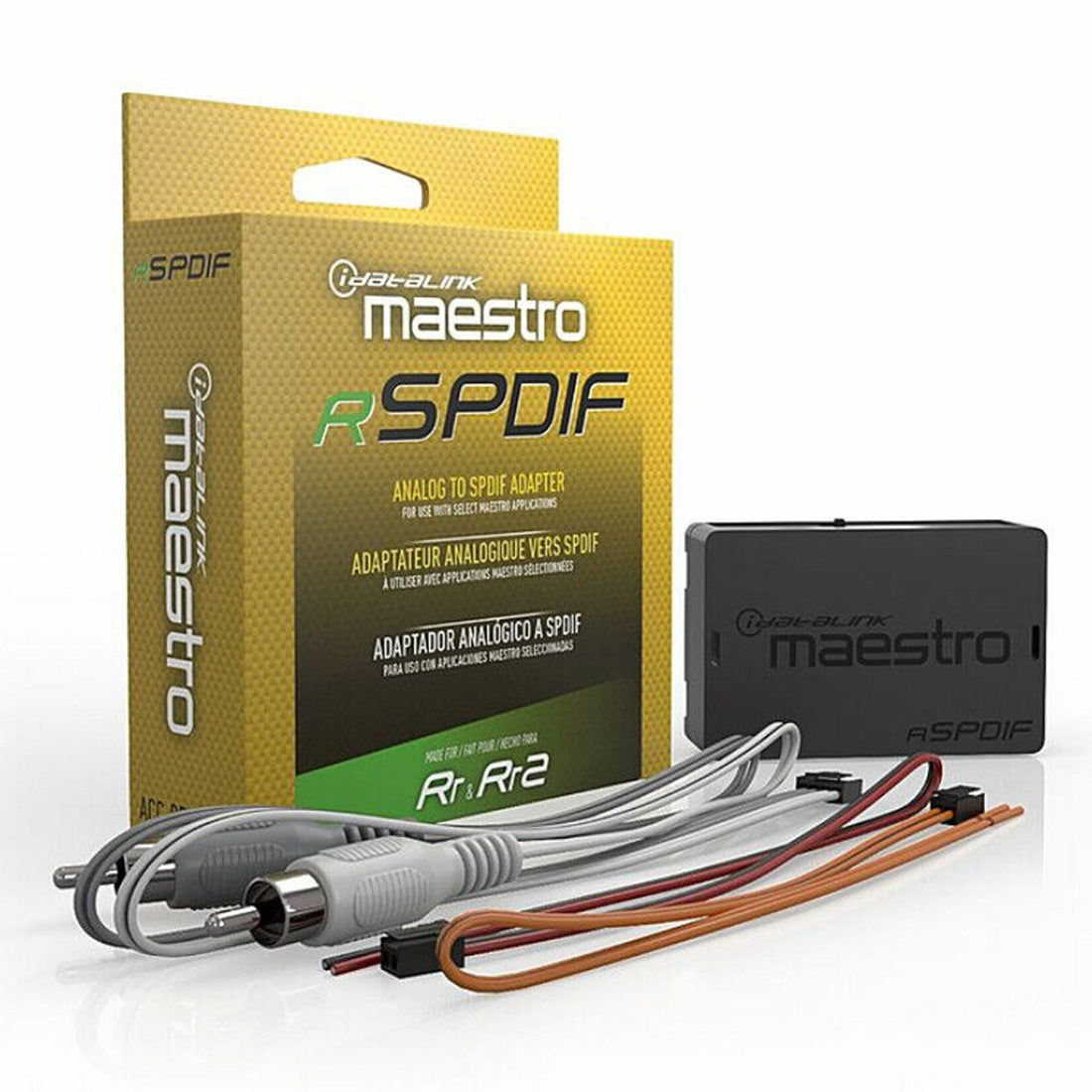
iDatalink Maestro ACC-AR-SPDIF SPDIF to Analog / TOSLINK Converter
Sometimes the factory amplifier is the part we want gone, but the audio feeding it is still digital. That is where ACC-AR-SPDIF earns its place.
On supported Maestro amplifier-replacement applications, the factory radio can send its music to the original amplifier as an SPDIF digital stream. A conventional aftermarket amplifier cannot use that stream by itself, and some DSPs need either optical or analog input. ACC-AR-SPDIF converts the supported factory SPDIF feed to either TOSLINK optical or stereo analog output.
That keeps the system design flexible. If the downstream DSP has TOSLINK, we can keep the music path digital into the processor. If the equipment needs conventional analog input, the converter provides that path instead. The point is not to add another box for the sake of it; it is to translate the factory signal only when the new equipment actually needs the translation.
Where It Fits in the Maestro System
ACC-AR-SPDIF is designed to work with a supported Maestro AR amplifier-replacement module or the Rockford Fosgate/iDatalink DSR1, along with the correct compatible vehicle T-harness. It is pre-wired around the Maestro harness architecture rather than being a generic loose SPDIF converter.
That distinction matters: ACC-AR-SPDIF is not a standalone interface. It does not replace Maestro AR, DSR1 or the vehicle-specific T-harness, and it does not create support for a vehicle that is not listed for the corresponding Maestro amplifier-replacement solution.
Most Often Seen on Hyundai / Kia SPDIF Systems
This converter is commonly part of supported Hyundai and Kia factory-amplified installations where the factory source sends digital music to the OEM amplifier. The exact vehicle, factory audio package and HRN-AR harness still decide whether ACC-AR-SPDIF is required.
If the selected DSP already has the dedicated compatible SPDIF input required by the supported Maestro workflow, the system may not need conversion to analog. We choose the part from the actual signal path, not simply because the vehicle has a premium-audio badge.
44.1 kHz and 48 kHz Support
iDatalink documents support for the two common SPDIF rates used in these applications: 44.1 kHz and 48 kHz. That lets the converter handle the supported factory digital stream and provide the appropriate analog or TOSLINK output without treating every vehicle's digital audio as though it were the same.
Do Not Confuse It With ACC-RR-SPDIF
ACC-AR-SPDIF takes a supported factory SPDIF digital stream and converts it out to TOSLINK optical or stereo analog when the factory amplifier is being replaced.
ACC-RR-SPDIF solves the opposite problem: it takes an aftermarket radio's analog preamp audio and converts it into SPDIF so a supported factory digital amplifier can remain in the vehicle.
The direction matters. We choose between them by first deciding whether the factory amplifier is staying or leaving and what signal format the next piece of equipment actually accepts.
Manufacturer Specifications
- Model: ACC-AR-SPDIF
- Product type: Factory SPDIF digital-audio output converter for supported Maestro amplifier-replacement installations
- Input: Supported factory-radio SPDIF digital audio
- Outputs: Stereo analog audio or TOSLINK optical digital audio
- Supported SPDIF rates: 44.1 kHz and 48 kHz
- Compatible integration hardware: Supported Maestro AR or Rockford Fosgate/iDatalink DSR1 applications
- Vehicle connection: Pre-wired for compatible Maestro T-harnesses
- Standalone use: Not a standalone device; compatible integration module and vehicle T-harness are required
Converter only. Compatible Maestro AR or DSR1 hardware, vehicle-specific T-harness, DSP/amplifier and installation wiring are sold separately.
Manufacturer: iDatalink Maestro
Where this fits in the build
This is a system-control or DSP component. The correct choice depends on the signal path, channel count, routing, retained features and the rest of the amplifier and speaker plan.