


Description
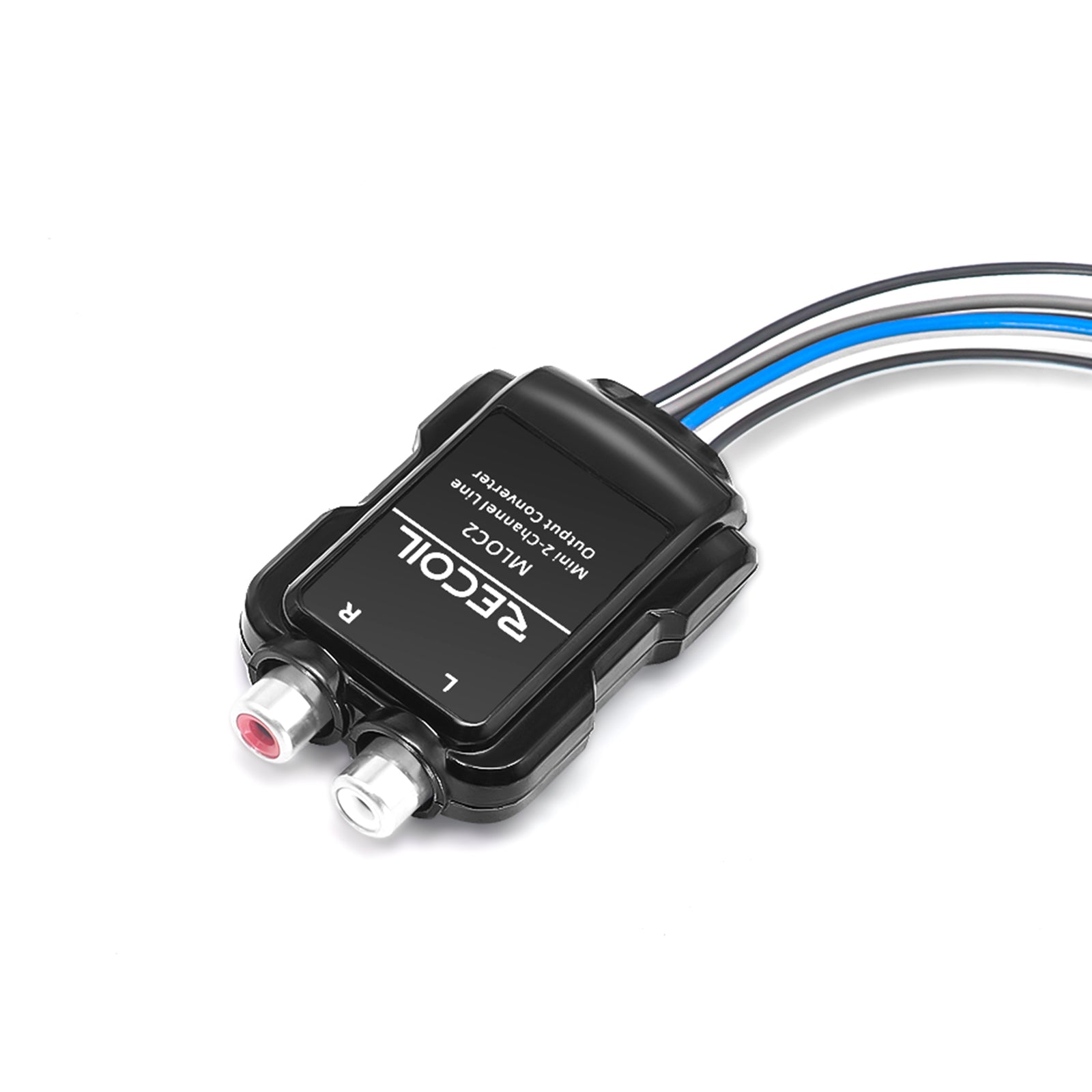
MLOC2 — Smart Micro 2-Channel Line Output Converter
MLOC2 is the simple factory-radio integration tool when the system only needs one stereo pair converted from speaker level to RCA—for example, adding a mono sub amplifier or a two-channel amp. It also provides a DC-offset-triggered 12V remote output, avoiding a separate switched-wire search on compatible OEM systems.
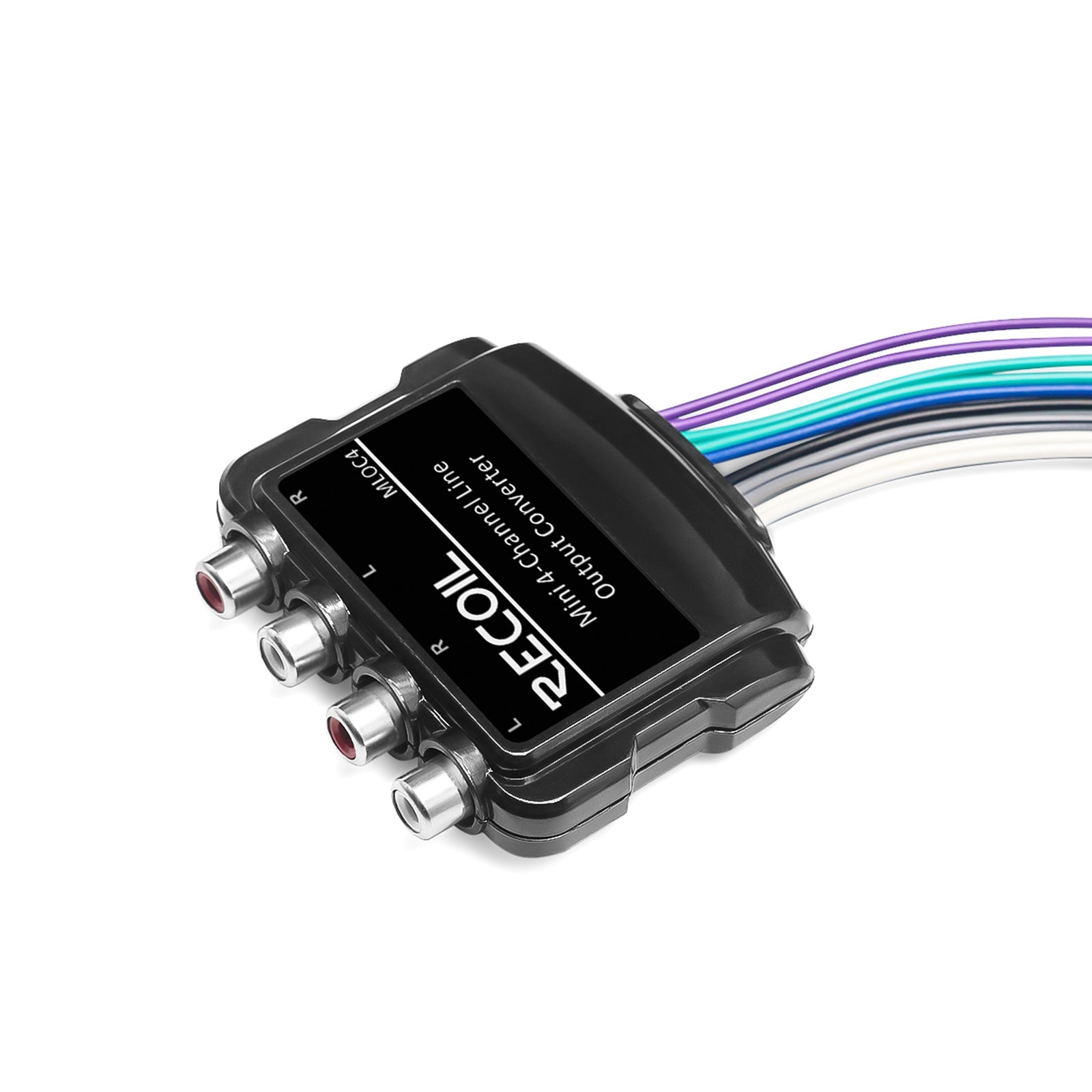
SMS would use it only after confirming the factory signal is appropriate for a basic LOC. If the vehicle uses active crossovers, summing, ANC, all-pass processing or data-driven amplification, a vehicle-specific interface or DSP integration path is usually the better answer. Choose MLOC4 when front and rear signal pairs both need to be preserved.
MANUFACTURER SPECIFICATIONS
• Channels: 2
• Speaker-level input: Up to 80W / 20V
• RCA output: Up to 10V
• Frequency response: 20 Hz–20 kHz
• Input load: 60 ohms
• 12V DC-offset remote turn-on output
• Status LED
• OFC speaker-wire leads
MLOC2 is the simple factory-radio integration tool when the system only needs one stereo pair converted from speaker level to RCA—for example, adding a mono sub amplifier or a two-channel amp. It also provides a DC-offset-triggered 12V remote output, avoiding a separate switched-wire search on compatible OEM systems.
SMS would use it only after confirming the factory signal is appropriate for a basic LOC. If the vehicle uses active crossovers, summing, ANC, all-pass processing or data-driven amplification, a vehicle-specific interface or DSP integration path is usually the better answer. Choose MLOC4 when front and rear signal pairs both need to be preserved.
MANUFACTURER SPECIFICATIONS
• Channels: 2
• Speaker-level input: Up to 80W / 20V
• RCA output: Up to 10V
• Frequency response: 20 Hz–20 kHz
• Input load: 60 ohms
• 12V DC-offset remote turn-on output
• Status LED
• OFC speaker-wire leads
DSP · OEM INTEGRATION
Where this fits in the build
This is a system-control or DSP component. The correct choice depends on the signal path, channel count, routing, retained features and the rest of the amplifier and speaker plan.
Plan aroundVerify the source signal and vehicle architecture first.
Match itPlan inputs, outputs, summing, routing and gain structure as one signal path.
Finish itTune after installation, polarity, crossover capability and levels are correct.