

Description
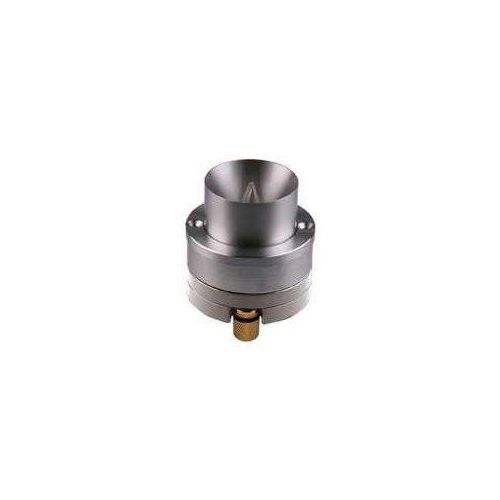
Beyma AST05 4-Ohm Competition Bullet Tweeter Pair
When the mids have plenty of output but the system loses the top end as soon as the volume comes up, the answer is not automatically more amplifier power. The high-frequency driver has to start efficient enough to stay with the rest of the system.
The AST05 is Beyma’s compact Competition-series answer for that job. It is a 4-ohm bullet tweeter sold as a pair, built with an aluminum diaphragm, aluminum front cover and neodymium motor. Beyma’s manufacturer data rates it at 25 watts RMS per tweeter, 105 dB sensitivity and a published 3 kHz–20 kHz range, with a 5 kHz / 12 dB-per-octave recommended crossover.
That combination is why we look at the AST05 for motorcycles, Jeeps, powersports builds and high-output custom doors. It gives the high-frequency section enough efficiency to keep up with pro-style mids without forcing us to dump unnecessary power into a small tweeter.
What problem does the AST05 solve?
Put a conventional low-90-dB tweeter next to several 100-plus-dB midrange drivers and the mismatch becomes obvious. The mids keep getting louder while the high-frequency section starts sounding buried. Turning up the tweeter amplifier can help only until thermal limits, distortion or harshness become the next problem.
The AST05 starts from a high-efficiency platform. At 105 dB sensitivity, it produces substantial output from relatively little input. That gives us headroom to match a loud midrange section while still keeping the tweeter inside a sensible operating window.
The practical advantage is not “maximum treble.” It is having enough clean high-frequency output available that we can tune the tweeter down to the correct level instead of asking an under-sized high-frequency driver to run flat-out all the time.
AST05 versus AST07
These two sit close enough in the Beyma catalog that the buyer needs a real reason to choose one.
AST05: the compact neodymium Competition tweeter. It is rated at 25 watts RMS, 105 dB sensitivity and uses a 1.02-inch aluminum diaphragm/voice-coil assembly. It makes sense when space and weight matter and the system still needs serious efficiency.
AST07: the higher-power alternative. It is rated at 35 watts AES, 106 dB sensitivity, 4 ohms and 2 kHz–20 kHz, and the pair includes four diffusers. We look at the AST07 when the system needs more upper-range output capacity and the diffuser options are useful to the installation.
So this is not “AST07 costs more, therefore buy it.” If the AST05 already has enough output for the midrange package and its smaller neodymium construction fits the panel better, it can be the more logical choice.
AST05 versus AST22
The AST22 is a much larger tweeter with a 1.5-inch voice coil, ferrite motor and a published 40-degree conical dispersion pattern. It is rated at 107 dB sensitivity and 25 watts AES.
That makes the AST22 attractive when the build has room for a larger tweeter and the goal is a more focused, high-output high-frequency source. The AST05 is easier to package and lighter, while still offering Competition-series efficiency.
If we are building a crowded motorcycle fairing or a custom panel where every inch matters, AST05 packaging may win. If the panel has room and the system architecture benefits from the AST22’s larger format and defined dispersion, that is a different buying decision.
The frequency-range number is not the crossover setting.
Beyma publishes the AST05 down to 3 kHz, but the manufacturer recommends a 5 kHz crossover at 12 dB/octave. Those are not contradictory numbers.
The frequency range tells us where the driver produces usable measured output. The recommended crossover tells us where Beyma expects the tweeter to be protected in an actual system. The AST05 also has a published resonant frequency of 3.7 kHz, so trying to cross it aggressively near the bottom of the response range at high output is exactly the kind of setup we avoid.
In a real build, we start with the manufacturer’s protection requirement and then verify the acoustic handoff to the midrange. If the mid cannot stay clean enough to meet the tweeter around that region, the answer is to choose a different driver combination—not force the AST05 lower because the spec sheet shows output there.
Why 25 watts is not a small number in this application
Tweeter wattage cannot be compared directly with midrange wattage. A tweeter only reproduces the upper portion of the spectrum, and the AST05 is far more efficient than most conventional full-range speakers.
With 105 dB sensitivity, the tweeter does not need hundreds of watts to become extremely loud. The bigger risks are poor crossover protection and bad gain structure. A clipped or over-driven high-frequency channel can damage a tweeter that never needed that much voltage in the first place.
We set amplifier gain from the actual system requirement, then level-match the AST05 to the mids. Available output is useful; using all of it just because it is there is not the goal.
Where we would actually use it
The AST05 makes sense above Beyma 6.5-, 8- and 10-inch high-efficiency mids in systems where the customer expects the music to stay clear at real volume. Motorcycle fairings and bags, Jeep and UTV panels, multi-speaker custom doors and demo-oriented mobile builds are all natural applications.
In an open-air system, the challenge is not just SPL measured near the speaker. Wind, road noise and listening distance eat up high-frequency information fast. Starting with a very efficient tweeter gives us enough headroom to keep cymbals, vocal articulation and upper harmonics present without turning the system into a harsh wall of treble.
For a quiet daily-driver front stage, we would not choose the AST05 just because it has a bigger sensitivity number. A lower-output tweeter may be easier to integrate when the system goal is moderate listening levels and a conventional factory-style soundstage. The AST05 earns its place when output is genuinely part of the problem.
How we would integrate it with DSP
We high-pass the AST05 safely first. Then we level-match it against the midrange rather than tuning by amplifier gain position. Once the basic level is right, we measure the crossover region, check polarity and arrival time, and use EQ only after those fundamentals are correct.
The tweeter’s physical location matters. A high-efficiency driver mounted low in a door, buried behind a panel edge or aimed away from the listener can still produce poor coverage. DSP can adjust level and timing; it cannot redirect acoustic energy that never reaches the listening position.
The practical result: the AST05 gives a high-output Beyma system a compact, efficient top end that can stay with serious mids while still leaving enough headroom to tune for balance instead of simply chasing loudness.
Manufacturer Specifications
| Model | AST05 |
|---|---|
| Sold as | Pair |
| Nominal impedance | 4 ohms |
| Power handling | 25 W RMS per tweeter |
| Maximum power | 100 W per tweeter |
| Sensitivity | 105 dB, 1 W / 1 m |
| Published frequency range | 3 kHz–20 kHz |
| Recommended crossover | 5 kHz at 12 dB/octave |
| Resonant frequency (Fs) | 3.7 kHz |
| Voice-coil diameter | 25.8 mm / 1.02 in |
| Overall diameter | 60 mm / 2.36 in |
| Overall depth | 68 mm / 2.68 in |
| Baffle cutout | 43 mm / 1.69 in |
| Bolt-circle diameter | 51.5 mm / 2.03 in |
| Diaphragm | Aluminum |
| Front cover | Aluminum |
| Magnet | Neodymium |
System guidance: use the AST05 with manufacturer-appropriate high-pass protection. Final amplifier gain, attenuation, crossover slope, EQ and DSP settings should be established around the exact midrange and installation.
Where this fits in the build
These speakers have to work where wind, road noise, mounting space and exposure change the job. Match the driver to the actual location, output target, amplifier power and environment instead of treating it like a normal door-speaker replacement.