

Description
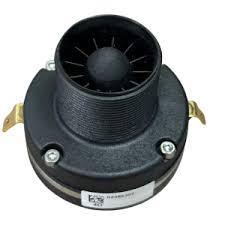
Beyma AST07 4-Ohm High-Output Tweeter Pair with Four Diffusers
If the high-frequency section needs to stay loud enough for a serious midrange package but you also need more control over how that top end is physically presented, the AST07 is the Beyma tweeter that solves both problems in one pair.
The AST07 is a pair of 4-ohm tweeters rated at 35 watts AES each, 106 dB sensitivity and a published 2 kHz–20 kHz range. The pair also includes four diffusers. That makes the AST07 more than a slightly different AST05—it gives the installer another level of output capacity plus options in how the high-frequency energy is presented at the front of the tweeter.
That matters in motorcycles, Jeeps, powersports systems and custom multi-speaker panels, because high-frequency performance is not just about how loud the diaphragm can get. Where the tweeter sits, what it points at and how the front geometry distributes the output all affect what the listener actually hears.
Why choose the AST07 instead of simply adding more tweeters?
If one tweeter is being overwhelmed by several high-efficiency mids, doubling the number of tweeters can increase output, but it also adds more cutouts, more wiring and more acoustic sources that have to work together.
The AST07 starts at 106 dB sensitivity and carries a 35-watt AES rating per tweeter. That gives one left/right pair significant acoustic capability before we start multiplying driver count.
For a customer, the advantage is cleaner system architecture. If one properly protected AST07 per side already reaches the required high-frequency level, we do not need to fill the panel with extra tweeters just to keep pace with the mids.
The four diffusers matter because the panel is part of the system.
The AST07 pair includes four diffusers. We treat those as installation tools, not decorative pieces.
High frequencies become directional. A tweeter that measures strong directly on axis can sound weak when the listener sits far off that axis. The diffuser arrangement gives the installer choices in how the front of the tweeter is configured for the particular location.
Do not assign a numeric coverage angle to a diffuser option unless it is specified for that exact configuration. The useful point is that the AST07 package gives more physical configuration choices than a fixed-front tweeter, and those choices can matter when a fairing, door panel or pod forces the tweeter into a less-than-perfect position.
AST07 versus AST05: more thermal rating, different installation flexibility.
The AST05 and AST07 both belong in high-output systems, but they do not solve the exact same problem.
AST05: compact neodymium Competition tweeter, 25 watts RMS, 105 dB sensitivity, aluminum diaphragm and a manufacturer-documented 5 kHz / 12 dB-per-octave crossover recommendation. Choose it when compact size, lower weight and a very efficient conventional bullet-tweeter format make the most sense.
AST07: 35 watts AES, 106 dB sensitivity, published 2 kHz–20 kHz range and four included diffusers. Choose it when the system needs more continuous high-frequency capacity and the diffuser choices help solve the physical installation.
The AST07 is not automatically the upgrade. If the AST05 already matches the mids and fits the panel better, there is no reason to add size or complexity just because another model has a higher rating.
AST07 versus AST22: pair flexibility versus larger single-driver format.
The AST22 is a larger-format 4-ohm compression tweeter with a 1.5-inch voice coil, 107 dB sensitivity, 25 watts AES and a published 40-degree conical dispersion pattern.
AST22: makes sense when the system wants a large, focused, fixed high-frequency source and the panel has room for it.
AST07: makes sense when the system needs very high efficiency in a left/right pair and the included diffuser options are useful to the fabrication.
One extra decibel of sensitivity on the AST22 does not automatically make it the better answer. The actual panel space, target coverage and number of tweeter locations decide which model makes sense.
Do not use the 2 kHz response figure as a blind crossover point.
The AST07 is published from 2 kHz to 20 kHz. That tells us the range over which the tweeter is specified to produce output. It does not, by itself, tell us the safe crossover frequency at full system output.
Use high-pass protection appropriate to the exact amplifier voltage, desired SPL and midrange pairing. If the lower driver cannot reach high enough cleanly to meet the tweeter safely, change the driver combination instead of gambling with the tweeter.
What 35 watts AES really means on a 106 dB tweeter.
At 106 dB sensitivity, the AST07 already creates a lot of acoustic output from very little power. The 35-watt AES rating gives additional thermal capacity, but it is not a target telling us to feed 35 watts continuously.
High-frequency drivers are usually damaged by the wrong combination of crossover, clipping and gain structure—not because the system somehow failed to use every watt on the label.
We size and set the amplifier around the complete high-frequency section. The goal is clean voltage and useful headroom, with enough attenuation that the tweeter blends into the system instead of dominating it.
Where we would use the AST07.
The AST07 is a strong fit for motorcycle fairings and bags, Jeep and UTV speaker panels, open-air systems, multi-driver custom doors and other builds where the mids have enough efficiency that a standard tweeter starts disappearing at volume.
It is especially useful when the installer needs a high-output pair but does not want to commit the panel to multiple separate tweeter locations. The diffuser package gives us additional options during mock-up, while the 106 dB sensitivity gives us enough acoustic headroom to work with.
For a conventional daily-driver front stage where the goal is smooth imaging at moderate output, this can be more tweeter than the system requires. The AST07 earns its place when the customer actually needs the projection and efficiency.
How we would tune it.
We start with safe high-pass protection, then set tweeter level against the midrange. After that, we measure the crossover region, check polarity and arrival time, and correct the installed response with DSP.
We also evaluate the diffuser and physical aim before reaching for EQ. If the listener is sitting outside the useful high-frequency path, boosting the top end can make the on-axis area harsher without solving the off-axis problem.
The practical result: the AST07 gives a serious Beyma high-output system an efficient left/right tweeter pair with more continuous power capacity than AST05 and added front-end diffuser flexibility for installations where placement is part of the challenge.
Manufacturer Specifications
| Model | AST07 |
|---|---|
| Sold as | Pair |
| Included | Four diffusers |
| Nominal impedance | 4 ohms |
| Power handling | 35 W AES per tweeter |
| Sensitivity | 106 dB, 1 W / 1 m |
| Published frequency range | 2 kHz–20 kHz |
System guidance: do not use the 2 kHz response figure as an automatic crossover setting. Select high-pass protection, amplifier level and crossover behavior around the actual midrange pairing and intended output.
Where this fits in the build
These speakers have to work where wind, road noise, mounting space and exposure change the job. Match the driver to the actual location, output target, amplifier power and environment instead of treating it like a normal door-speaker replacement.