


Description
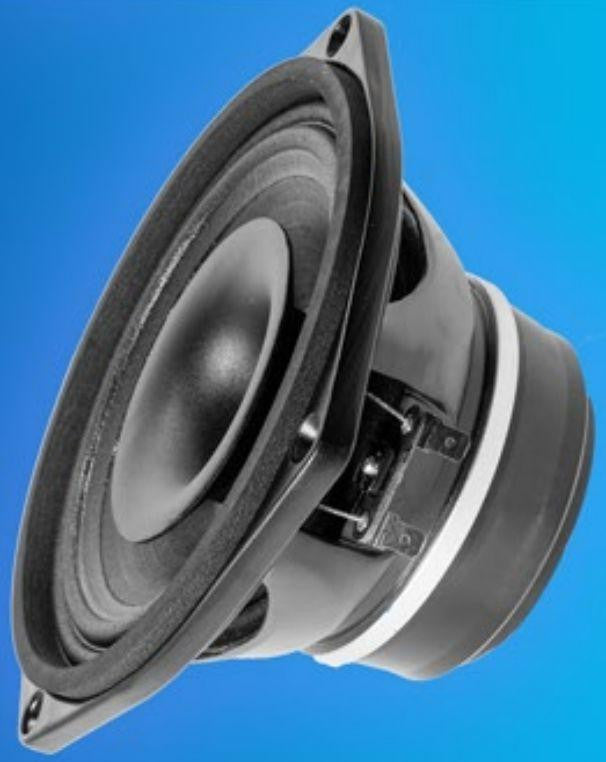
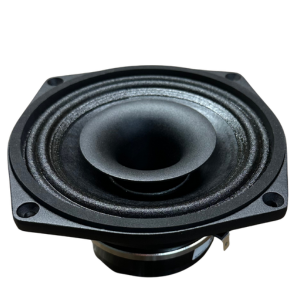
Beyma PRO6CXND 6.5-Inch Neodymium High-Output Coaxial
If a 5-inch coaxial solves the packaging problem but the system still needs more cone area, more low/mid output and more efficiency, the PRO6CXND is the 6.5-inch step up.
The Beyma PRO6CXND combines an 8-ohm 6.5-inch LF/mid section and an 8-ohm HF section in one coaxial frame. Published exact-model data lists 200 / 40 watts AES, 400 / 80 watts program, 95 / 104 dB LF/HF sensitivity and an 82 Hz–20 kHz overall frequency range.
The point is not just that everything fits in one basket. The point is that the 6.5-inch low/mid and high-frequency sections originate from the same speaker location, which gives us a serious high-output two-way solution without having to fabricate separate locations for a mid and tweeter.
The 6.5-inch cone gives the low/mid section more authority.
Compared with the PRO5CXND, the PRO6CXND gives us more cone area and more LF power handling.
What that solves: the speaker can create more body through the lower mids and produce more acoustic output before the system has to hand everything off to a separate midbass driver.
That matters in motorcycle fairings, powersports pods and custom doors where one coaxial location has to do a lot of work.
95 dB LF sensitivity means the bigger cone is also efficient.
Published exact-model data lists the PRO6CXND LF section at 95 dB sensitivity and the HF section at 104 dB.
That gives the coaxial enough efficiency to stay aggressive without making the amplifier carry the entire output burden.
In an open-cabin vehicle, that is exactly what we want: strong vocal and instrumental projection without building the whole system around brute-force wattage.
200 watts AES on the LF section gives the 6.5 real working headroom.
The PRO6CXND low/mid section is rated at 200 watts AES / 400 watts program, while the HF section is rated at 40 watts AES / 80 watts program.
Those are separate driver ratings. They should not be added together and treated like one conventional 240-watt coaxial input.
The LF and HF sections need proper frequency division so each one only sees the range it was built to reproduce.
That is the difference between installing a pro coaxial correctly and just bolting it into a hole.
The 82 Hz–20 kHz range gives us a complete two-way platform.
Published PRO6CXND data lists the complete coaxial system from 82 Hz to 20 kHz.
That does not mean the LF cone itself plays to 20 kHz. The coaxial system gets there because the dedicated HF section takes over the upper range.
Likewise, 82 Hz is a published response limit, not a universal high-pass setting. The actual LF crossover still needs to be chosen around the enclosure, required output and amplifier power.
This is why the coaxial architecture matters: the low/mid cone can concentrate on the frequencies that require cone area while the HF driver handles the range where a smaller diaphragm is the better tool.
The 8-ohm LF/HF architecture can make multi-speaker wiring easier.
Both sections use an 8-ohm nominal impedance.
That can be useful when multiple coaxials share amplifier channels. Higher individual impedance gives the system designer more room to parallel multiple like sections without immediately creating an excessively low final load.
For example, two 8-ohm LF sections wired in parallel create a 4-ohm LF load. The HF sections still need their own proper crossover and amplifier/network plan.
The impedance is part of the system plan—not a reason to assume this speaker needs more power because the number is higher.
The neodymium platform keeps the output package lighter.
The PRO6CXND uses a neodymium coaxial architecture.
That matters in motorcycles, powersports and fabricated panels because motor weight adds up fast when several speakers are installed.
The benefit is getting this level of two-way output from one 6.5-inch location without relying on a large conventional ferrite package behind every speaker position.
PRO6CXND versus PRO5CXND.
PRO5CXND: the compact choice. 5-inch frame, 150 / 40 watts LF/HF AES and lower overall packaging demand. Choose it when physical space is the hard limit.
PRO6CXND: 6.5-inch frame, 200 / 40 watts LF/HF AES, 95 / 104 dB published sensitivity and more cone area. Choose it when the installation can take the larger speaker and the system needs more output and body.
The 5-inch solves the tighter-space problem. The 6.5-inch gives the same coaxial concept more acoustic capability.
PRO6CXND versus PRO6FX240ND.
PRO6CXND: 200 / 40 watts AES, 95 / 104 dB sensitivity and an 82 Hz–20 kHz published range. Choose it when the standard Beyma neo coaxial platform, slightly higher published efficiency and lower response limit fit the system.
PRO6FX240ND: 200 / 40 watts AES, 94 / 103 dB sensitivity, 100 Hz–20 kHz and carbon-fiber LF cone construction. Choose it when the FX carbon-fiber platform is part of the design priority.
The FX model is not automatically the better choice because it costs more. The CXND actually carries the higher published sensitivity and lower published response limit; the FX changes the cone and construction approach.
PRO6CXND versus a separate PRO6 mid + tweeter.
A separate component layout gives us more freedom to choose the exact midrange and tweeter locations, crossover points and aiming.
The PRO6CXND makes more sense when the installation cannot support that extra fabrication or when keeping both acoustic sources in one location is the cleaner solution.
That is especially valuable in fairings, pods and speaker panels where every additional cutout becomes another packaging problem.
Where we would use it.
This is a strong fit for motorcycle fairings, powersports pods, Jeep and open-cabin systems, and custom doors where one 6.5-inch location has to provide both serious low/mid output and a dedicated high-frequency section.
It also makes sense in multi-speaker panels where repeating the same coaxial module creates consistent coverage across the panel.
With proper crossover integration and DSP, we can protect the LF section, set the LF/HF handoff correctly, then manage level, EQ and timing so the output is balanced instead of simply aggressive.
The result: a 6.5-inch Beyma coaxial with more low/mid power and cone area than the compact 5-inch model while keeping the same one-location solution for a complete high-output two-way speaker system.
Manufacturer Specifications
- Model: Beyma PRO6CXND
- Product type: Professional coaxial loudspeaker
- Sold as: Single coaxial speaker
- Nominal diameter: 165 mm / 6.5 inches
- LF / HF nominal impedance: 8 / 8 ohms
- LF / HF power handling: 200 / 40 watts AES
- LF / HF program power: 400 / 80 watts
- LF / HF sensitivity: 95 / 104 dB
- Published frequency range: 82 Hz–20 kHz
Crossover / System Guidance
The PRO6CXND contains separate LF and HF sections in one coaxial frame. Final LF high-pass, LF/HF crossover, amplifier configuration, level, limiting and DSP settings must be selected around the actual installation and output target.
Where this fits in the build
These speakers have to work where wind, road noise, mounting space and exposure change the job. Match the driver to the actual location, output target, amplifier power and environment instead of treating it like a normal door-speaker replacement.