

Description
Beyma SC603 6.5-Inch 4-Ohm Full-Range Speaker Pair
If the goal is to replace a normal 6.5-inch car speaker and make the system sound fuller, clearer and more complete without turning the door into a pro-audio build, the SC603 is the Beyma that makes sense.
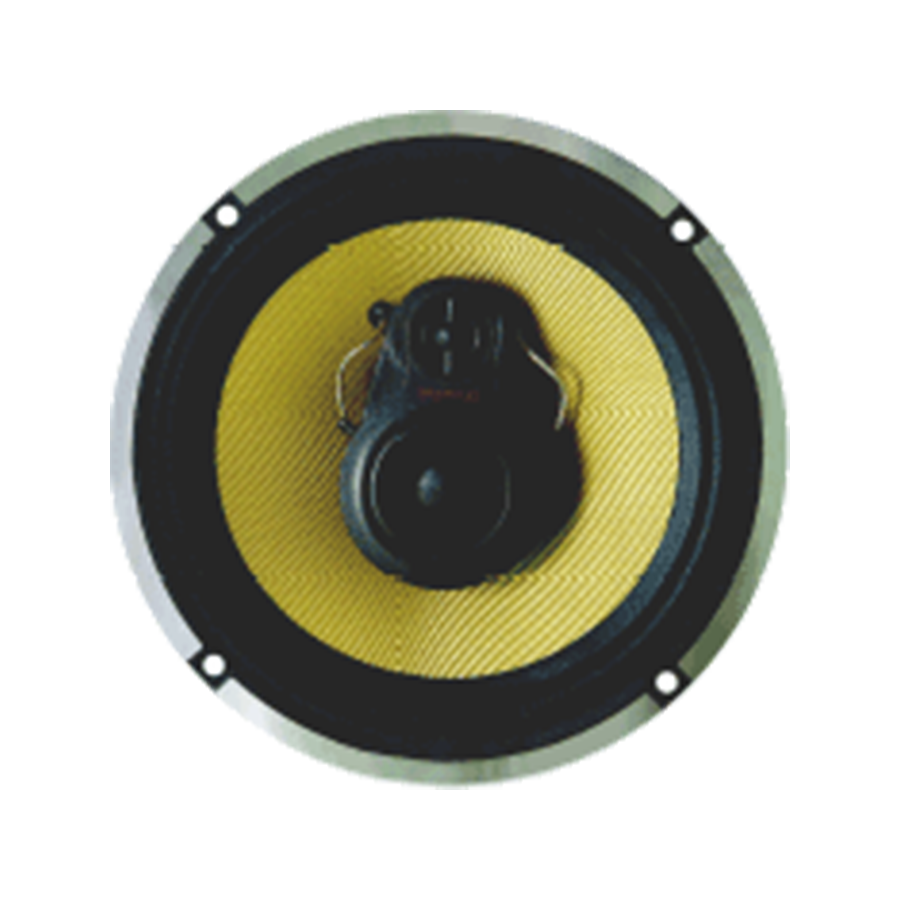
The SC603 comes from Beyma’s Sound Concept side of the lineup. It is a 6.5-inch, 4-ohm full-range car speaker sold as a pair and designed by Beyma for broad-band reproduction from a conventional speaker location.
That is a completely different job from a PRO6MI, 6V2BX or PRO6CXND. Those products are designed around much higher output or more specialized multi-way system roles. The SC603 is about broad, balanced daily listening from a straightforward factory-style 6.5-inch location.
The problem it solves is simple: factory speakers sound thin, but not every car needs a competition-style front stage.
A lot of customers want better sound without cutting the vehicle apart, building multiple speaker pods or adding separate high-efficiency mids and horns.
That is where the SC603 fits.
It gives us a complete full-range speaker assembly in the same general type of location a conventional 6.5-inch factory speaker uses. The goal is better bandwidth, better cone control and cleaner reproduction without changing the whole architecture of the system.
For a daily-driven car, rear fill, a straightforward front-speaker upgrade or a system where the customer values musical balance over maximum SPL, that makes a lot of sense.
The fiberglass cone is there for control, not marketing decoration.
Beyma specifies a special high-resistance fiberglass cone for the SC603.
A speaker cone needs to stay rigid enough to move as one surface instead of flexing and breaking up as frequency and output rise. Fiberglass gives the SC603 a stiff, lightweight diaphragm for clean bass and midrange reproduction.
What that does in the car: bass notes stay more controlled, vocals keep their shape, and the speaker is not depending on an overly soft cone to cover a very broad frequency range.
50 Hz–20 kHz is why this is a full-range speaker.
Beyma publishes the SC603 from 50 Hz to 20 kHz.
That does not mean we expect a 6.5-inch door speaker to replace a subwoofer at 50 Hz. It means the speaker was designed for broad-band reproduction rather than a narrow dedicated-midrange job.
That distinction matters.
A PRO6MI may be dramatically more efficient through the vocal range, but it needs a real driver below it and a tweeter above it. The SC603 is built for the customer who wants one speaker location to cover the music in a much more conventional way.
Three millimeters of Xmax gives the 6.5 useful cone movement without pretending it is a dedicated midbass.
Beyma publishes 3 mm Xmax for the SC603.
That gives the woofer section enough travel to produce useful bass and lower-midrange energy in a normal door or properly loaded installation.
It is not the 5.5–6 mm excursion of Beyma’s more aggressive low/mid coaxials, and it should not be sold like it is.
The SC603 is about balanced full-range performance, not trying to make one 6.5-inch cone do the job of a dedicated midbass or subwoofer.
90 dB sensitivity is appropriate for the kind of system this speaker belongs in.
Beyma publishes the SC603 at 90 dB sensitivity at 1 watt / 1 meter.
That is lower than the 94–105 dB numbers we see on Beyma’s high-output pro-audio drivers, because the SC603 is solving a different problem.
This speaker is designed for broad, conventional car-audio reproduction. It is not giving up bandwidth and cone behavior just to chase the highest SPL-per-watt number.
For a normal amplified car-audio system, 90 dB is still plenty usable when the amplifier and crossover are matched correctly.
75 watts RMS per speaker is enough when the system is designed around the speaker.
The SC603 is rated at 75 watts RMS per speaker, with a published maximum rating of 150 watts per speaker.
This is another place where chasing the largest watt number misses the point. A 75-watt full-range speaker can sound substantially better than a higher-power pro mid if the customer actually needs broad musical coverage rather than extreme output.
Clean power matters. Proper high-pass protection matters. Door treatment and mounting rigidity matter.
Putting 200 watts on a poorly mounted door speaker does not fix a weak baffle, air leaks or a bad crossover.
The 4-ohm load makes this easy to integrate into a normal car-audio amplifier.
The SC603 is a conventional 4-ohm speaker.
That makes it easy to pair one speaker per channel with the kind of 4-channel amplifier normally used in a daily car-audio system.
There is no multi-driver impedance puzzle here. One left speaker, one right speaker, one amplifier channel per side is the straightforward installation.
SC603 versus 6V2BX.
SC603: sold as a pair, 4 ohms, 75 watts RMS per speaker, 90 dB sensitivity and a broad 50 Hz–20 kHz full-range role. Choose it for a musical daily-driver upgrade where one conventional 6.5-inch location needs to sound complete.
6V2BX: sold individually, 8-ohm professional coaxial, much higher LF power handling, higher sensitivity and more excursion. Choose it when the system needs substantially more output and the installation is moving toward motorcycle, powersports or pro-audio-style performance.
The SC603 is the easier daily-listening answer. The 6V2BX is the high-output answer.
SC603 versus PRO6CXND.
PRO6CXND: a premium neodymium professional coaxial with separate high-power LF/HF sections, much higher sensitivity and a system architecture designed around serious output.
SC603: the Sound Concept full-range pair for customers who want a clean 6.5-inch upgrade without paying for capabilities they are not going to use.
If the vehicle is a motorcycle fighting wind noise at highway speed, the PRO6CXND makes more sense. If it is a daily car and the customer wants the doors to sound like music instead of a PA system, the SC603 is often the smarter choice.
Where we would actually use it.
We would look at the SC603 for normal car and truck door locations, rear speaker positions and straightforward amplified systems where the customer wants better tonal balance and broader response from a conventional speaker location.
We would not choose it as the first option for a high-output motorcycle, open-cabin Jeep or demo-style speaker wall. Beyma makes other drivers specifically for those jobs.
In a normal door, the quality of the installation still matters. A rigid adapter, proper sealing to the door panel, useful sound treatment and sensible high-pass protection can make a bigger difference than simply buying a speaker with a larger wattage number.
The practical result: a real Beyma full-range speaker pair for the customer who wants stronger daily sound—cleaner bass, clearer vocals and proper high-frequency coverage—from a conventional 6.5-inch car-audio location.
Manufacturer Specifications
| Model | SC603 |
|---|---|
| Series | Sound Concept |
| Product type | Full-range car loudspeaker |
| Sold as | Pair |
| Nominal diameter | 165 mm / 6.5 in |
| Nominal impedance | 4 ohms |
| Power handling | 75 W RMS per speaker |
| Maximum power | 150 W per speaker |
| Sensitivity | 90 dB, 1 W / 1 m |
| Published frequency range | 50 Hz–20 kHz |
| Low-frequency voice-coil diameter | 25 mm / 1 in |
| BL factor | 3.9 N/A |
| Moving mass | 0.013 kg |
| Resonant frequency (Fs) | 57 Hz |
| DC resistance (Re) | 3.4 ohms |
| Qms | 3.60 |
| Qes | 1.07 |
| Qts | 0.82 |
| Equivalent compliance volume (Vas) | 14 L / 0.49 cu ft |
| Reference efficiency | 0.2% |
| Effective cone area (Sd) | 130 cm² |
| Xmax | 3 mm |
| Voice-coil inductance (Le) | 0.50 mH at 1 kHz |
| Overall diameter | 165 mm / 6.5 in |
| Baffle cutout | 146 mm / 5.75 in |
| Mounting depth | 67 mm / 2.64 in |
| Cone | High-resistance fiberglass |
System guidance: the published 50 Hz lower response is not a universal high-pass recommendation. Final crossover, amplifier power and door/rear-chamber loading should be selected around the actual vehicle, required output and whether a subwoofer or dedicated midbass is being used.
Where this fits in the build
These speakers have to work where wind, road noise, mounting space and exposure change the job. Match the driver to the actual location, output target, amplifier power and environment instead of treating it like a normal door-speaker replacement.