


Description
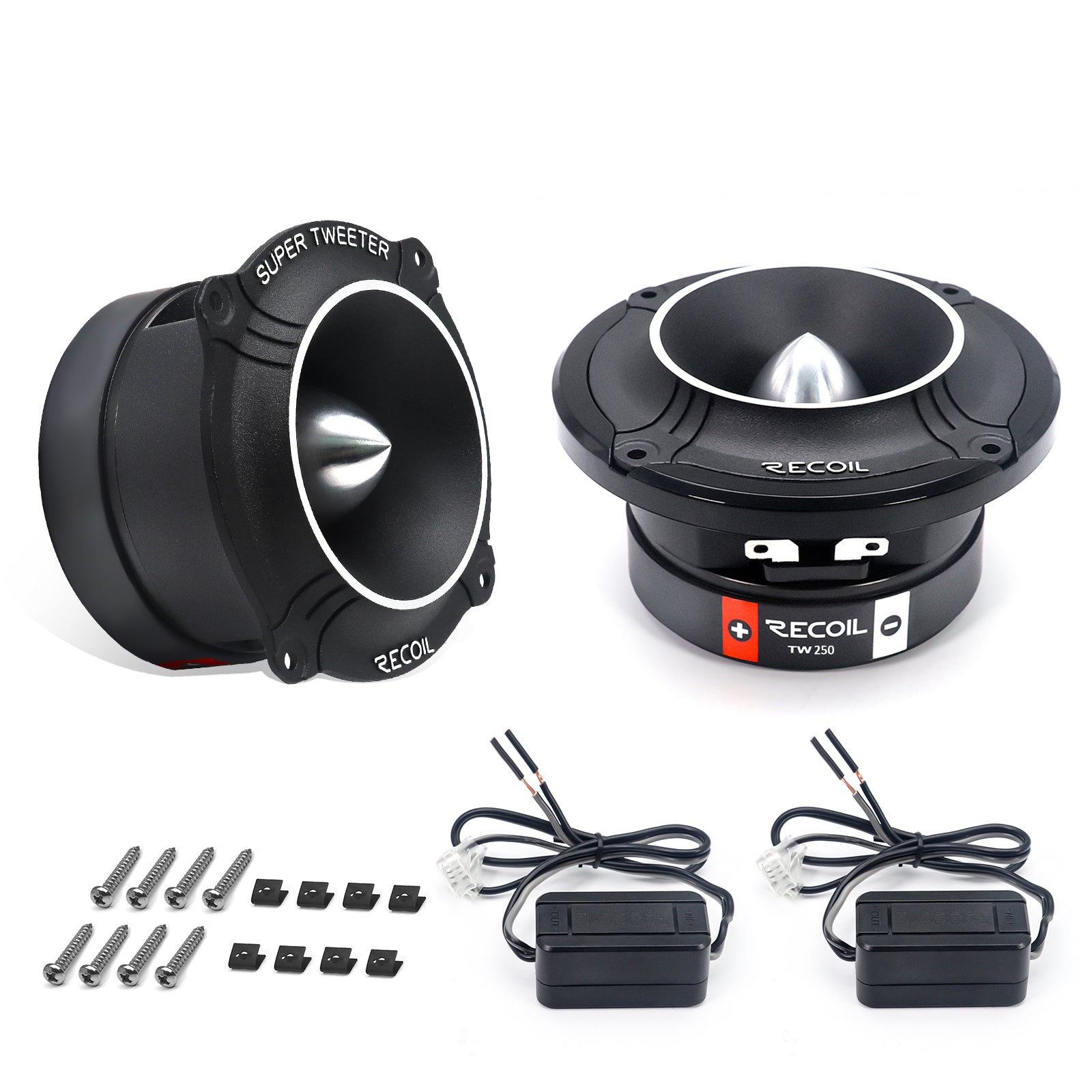
TW250 — 1-Inch High-Compression Bullet Super Tweeters — Pair
TW250 is the smaller high-output TW option when a normal dome tweeter cannot keep up with a bank of pro mids but the system does not need the larger TW380. Its bullet-style high-compression architecture is about projection and efficiency, not a soft OEM-style top end.
SMS would use TW250 above a properly crossed pro midrange section and set level so the highs match the rest of the system instead of simply running the tweeter as loud as possible. Recoil supplies an in-line protection capacitor, but that is not a substitute for a properly designed crossover or DSP high-pass in a serious system.
MANUFACTURER SPECIFICATIONS
• Sale unit: Pair (2 tweeters)
• Published pair power: 200 W RMS / 400 W max
• Nominal impedance: 4 ohms
• Voice coil: 1 in high-temperature Kapton
• Diaphragm: Aluminum
• Frame: Die-cast aluminum
• In-line capacitor crossover: Included
• Sensitivity: 103 dB
• Frequency response: 2 kHz–20 kHz
TW250 is the smaller high-output TW option when a normal dome tweeter cannot keep up with a bank of pro mids but the system does not need the larger TW380. Its bullet-style high-compression architecture is about projection and efficiency, not a soft OEM-style top end.
SMS would use TW250 above a properly crossed pro midrange section and set level so the highs match the rest of the system instead of simply running the tweeter as loud as possible. Recoil supplies an in-line protection capacitor, but that is not a substitute for a properly designed crossover or DSP high-pass in a serious system.
MANUFACTURER SPECIFICATIONS
• Sale unit: Pair (2 tweeters)
• Published pair power: 200 W RMS / 400 W max
• Nominal impedance: 4 ohms
• Voice coil: 1 in high-temperature Kapton
• Diaphragm: Aluminum
• Frame: Die-cast aluminum
• In-line capacitor crossover: Included
• Sensitivity: 103 dB
• Frequency response: 2 kHz–20 kHz
OPEN-AIR / MOTORCYCLE / POWERSPORTS FIT
Where this fits in the build
These speakers have to work where wind, road noise, mounting space and exposure change the job. Match the driver to the actual location, output target, amplifier power and environment instead of treating it like a normal door-speaker replacement.
Plan aroundConfirm mounting location, depth, cutout and how exposed the speaker will be.
Match itMatch efficiency, usable bandwidth and clean amplifier power to the output needed at speed or outdoors.
Finish itPlan crossover, mounting, wiring and electrical support with the complete open-air system.