
Description
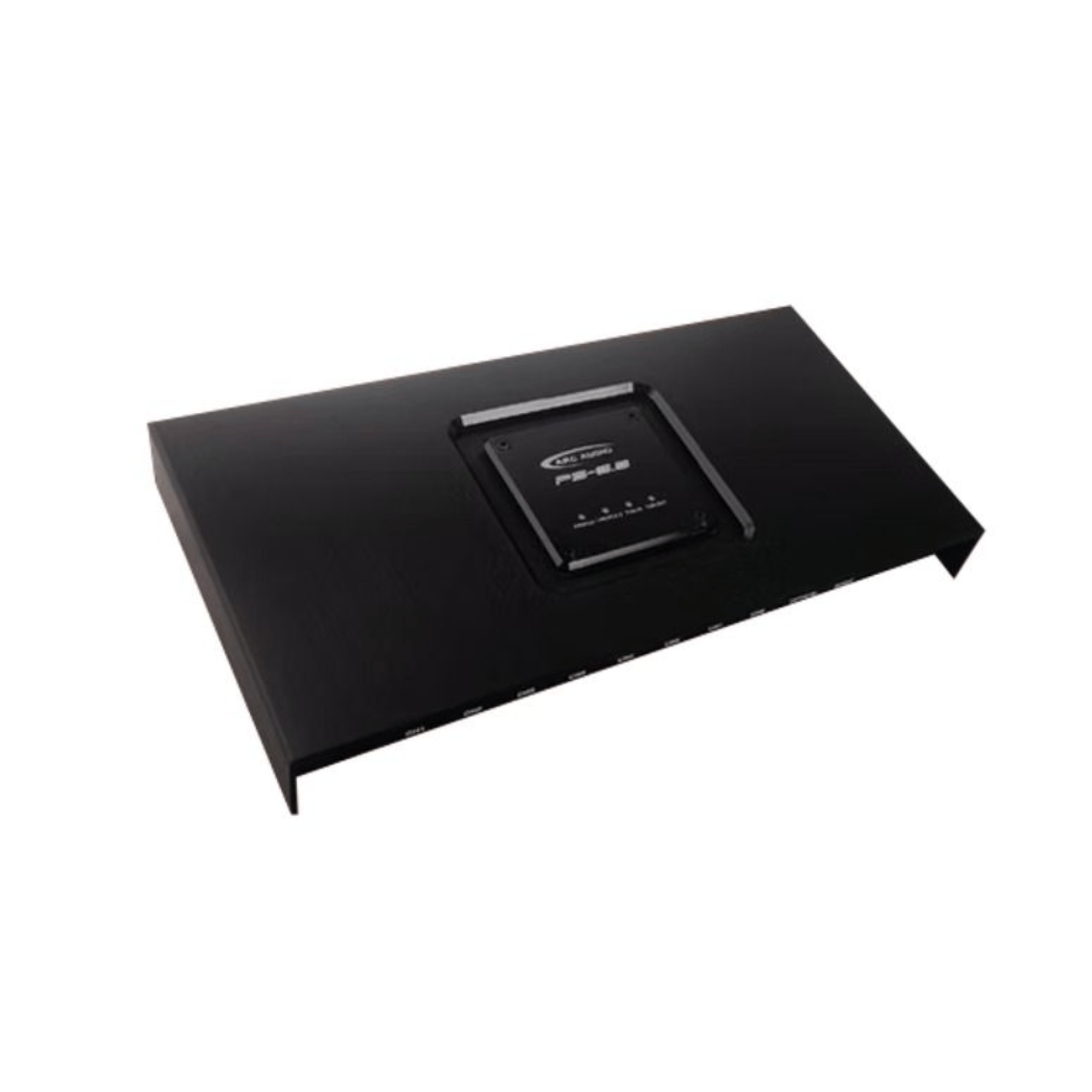
ARC Audio PS-6.8 Digital Signal Processor
Not every system needs ARC’s most expensive processor. It still needs the signal fixed, the speakers crossed over correctly, the stage aligned and every amplifier channel told exactly what job it is supposed to do.
That is where the PS-6.8 fits. ARC built it as the value-focused stand-alone DSP in the lineup: six analog inputs, eight processed outputs, digital input capability and full ARC Audio DNA tuning without requiring the customer to step into the Pro-Series hardware platform just to get a properly controlled system.
The point is not that the PS-6.8 is the “cheap ARC DSP.” The point is that if six inputs and eight outputs cover the system, spending more money on processor hardware the build does not need does not automatically make the system sound better.
Six inputs and eight outputs cover a lot of real systems.
Eight processed channels give us enough control for a serious daily-driver build without making the system more complicated than it needs to be.
An active two-way front stage uses four outputs. Add rear fill and a subwoofer channel and we are still comfortably inside the PS-6.8’s output count. A conventional front/rear/sub system gives us even more room for independent control.
The advantage is that each speaker section can get its own crossover, level, delay, phase and EQ decisions instead of several speakers sharing one compromised signal because the processor ran out of outputs.
What that solves: the system can be designed around what each speaker is supposed to do instead of around the limitations of the factory radio or amplifier.
The factory signal can stay—but it does not get to dictate the finished sound.
ARC gives the PS-6.8 a wide published analog input range of 0.5–16 V. That lets the processor accept low-level aftermarket signal or many higher-voltage OEM amplified signals without automatically forcing another interface into the chain.
That matters because factory systems often have EQ, bass roll-off, level differences and frequency shaping already built into the signal. The first job is understanding what is coming out of the factory system. Then the DSP can correct, route and rebuild that signal for the aftermarket speakers and amplifiers.
On supported vehicles, the PS-6.8 is also compatible with iDatalink Maestro AR when used with the required Maestro vehicle-specific module and harnessing. That gives us a cleaner integration path in factory-amplified systems where retaining the OEM radio and vehicle functions makes more sense than replacing the source.
Digital input keeps a clean digital source digital.
The PS-6.8 accepts both coaxial digital and Toslink optical input up to 96 kHz.
If the vehicle or integration module gives us a proper digital source, there is no reason to convert it to analog just because the processor cannot accept the format. The digital inputs let us preserve that signal into the DSP and do the crossover, routing and tuning work inside the processor.
That is especially useful in OEM-integration systems where the best available signal may come from a digital interface rather than from summing a stack of factory speaker outputs.
ARC DNA is the reason this is a real DSP and not an expensive line-output converter.
The PS-6.8 runs ARC Audio DNA, the same tuning environment used throughout ARC’s DSP family. That means the installer is working with a consistent toolset for signal routing, EQ, crossovers, time alignment, phase and level control.
A DSP tune is not just “flatten the EQ.” We use crossover control to keep each driver inside the range it can reproduce cleanly. We use delay to correct the different speaker distances from the listening position. We use phase and EQ to manage how adjacent drivers interact through the crossover region. Then we balance level so the system behaves like one front stage instead of separate speakers fighting for attention.
The customer hears the result, not the software: vocals pull into position, midbass arrives with the upper range instead of behind it, the subwoofer integrates with the front stage, and the system stays balanced as volume comes up.
Four presets give the tune practical flexibility.
The PS-6.8 supports up to four user-defined presets.
Those can be used when the system benefits from different tuning profiles or operating modes without requiring the customer to connect a laptop every time something changes.
An optional ARC Audio remote controller can also be used for assignable control. The important part is that user control is planned into the DSP architecture instead of forcing the customer to touch amplifier gains or undo the tune after delivery.
PS-6.8 or PSM-Pro?
Both processors give us six analog inputs and eight processed outputs, but they solve different installation problems.
Choose the PSM-Pro when the installation is physically tight or exposed—motorcycles, powersports, saddlebag systems, fairings and stealth installations where its micro-chassis and environmental construction matter.
Choose the PS-6.8 when the processor is living in a conventional vehicle and we want the value-focused eight-output ARC DSP without paying for packaging features the install does not need.
PS-6.8 or PS8-Pro?
The PS8-Pro is the step into ARC’s higher-end Pro-Series processing platform. It is the better choice when the system is being built around the Pro-Series hardware architecture and the additional performance and control justify the cost.
The PS-6.8 is the smarter choice when eight outputs cover the system and the customer needs proper OEM integration, digital input support and full DNA tuning without buying processor capability that will never be used.
Solve the actual system problem instead of automatically selling the most expensive processor because it has the longest specification sheet.
The result: a properly controlled eight-output system with ARC DNA tuning, strong OEM integration capability and digital-source support at a price point that leaves more of the system budget available for the speakers, amplification and installation that still have to do their jobs.
Manufacturer Specifications
- Processor type: Stand-alone digital signal processor
- DSP core: 24-bit Analog Devices ADAU1452
- Analog inputs: 6
- Processed outputs: 8
- Analog input compatibility: 0.5–16 V
- Digital inputs: Coaxial and Toslink optical
- Maximum digital sample rate: Up to 96 kHz
- DSP software: ARC Audio DNA
- Auto turn-on: DC signal sensing
- User presets: Up to 4
- Remote control: Optional compatible ARC Audio remote
- OEM integration: iDatalink Maestro AR compatible in supported factory systems with required Maestro vehicle-specific module and harnessing
Where this fits in the build
This is a system-control or DSP component. The correct choice depends on the signal path, channel count, routing, retained features and the rest of the amplifier and speaker plan.
Authorized Dealer — In-Store Purchase